

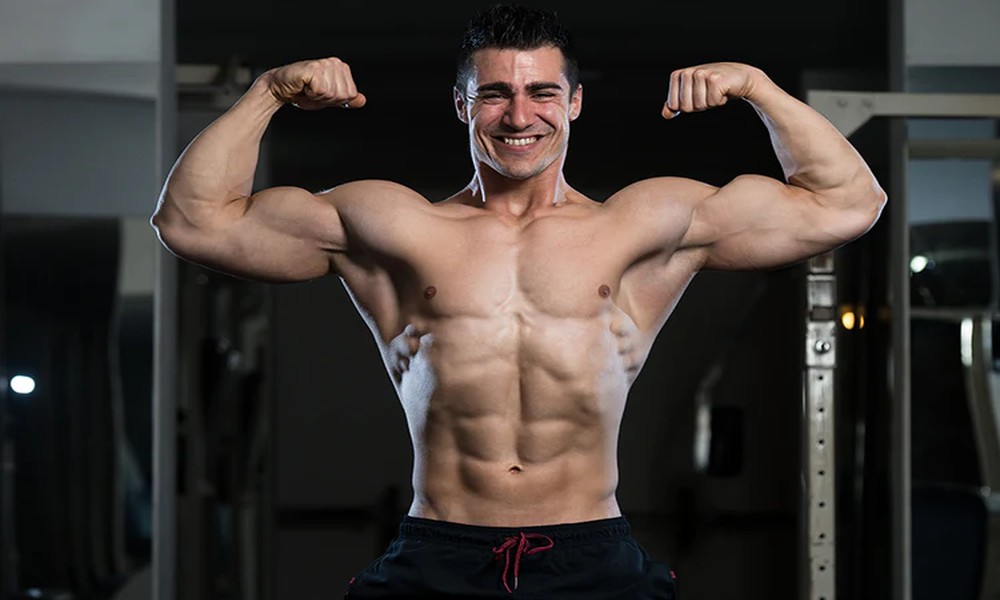
The seven mandatory bodybuilding poses are Front Double Biceps, Side Chest, Back Double Biceps, Side Triceps, Abs and Thighs, Most Muscular, and Front Lat Spread, supported by four guest-pose variants competitors choose to highlight strengths. Each pose displays muscle separation only when body fat clears a specific conditioning threshold: sub-8% for Front Double Biceps, sub-7% for Side Chest, sub-6% for Back Double Biceps. BellyProof’s research treats posing as engineered positions, not improvised flexes.
BellyProof’s bodybuilding posing names and technique reference covers all seven mandatory poses with cueing and the conditioning thresholds. Most competitors undertrain posing. Conditioning lands on schedule, but the neuromuscular positions that force maximum separation get practiced once a week or not at all. Peak-week drills run twice daily for 10 to 15 minutes and close that gap by teaching the nervous system to hold contraction patterns under fatigue and lights.
Why Posing Decides Half of Contest Day
Stage lighting and judging angles do not forgive slack positions. A well-conditioned competitor with loose shoulders, a hollowed chest, or passive hands loses symmetry points to someone 2 to 3% higher in body fat who knows how to brace and angle the body. The mandatory poses are sequenced to show muscle groups in order: upper body horizontal, upper body vertical, back thickness and width, arm isolation, core and lower body, explosive mass, and width. Judges score each pose for muscularity, symmetry, condition, and proportionality. A competitor who controls hip angle, core brace, and scapular retraction scores 5 to 10% higher than a competitor of identical conditioning who relies on flexing without mechanics.
The Seven Mandatory Poses
Pose-by-Pose Technique
Front Double Biceps: Feet shoulder-width apart, one foot forward, glutes and quads tensioned. Elbows at 90 degrees, hands rotated slightly outward to maximize biceps peak. Pull shoulders down and back to create upper chest prominence. Peak is achieved by supinating the forearms hard and driving the elbows back, not just bending them. Rolled shoulders hide the cap and lose upper chest separation.
Side Chest: Rotate 45 degrees, front foot back. Bring the rear arm up and forward, pressing the hand low to create lat flare. Rotate the torso into the chest, exhale forcefully for intercostal separation. The pose depends on rib-cage control and lat engagement. Most competitors underestimate the rotation; the torso should face nearly profile, not half-turn.
Back Double Biceps: Turn full back, feet staggered, glutes tensioned. Pull elbows low and back to build lat width while supinating both forearms to peak the biceps. The back resembles an inverted triangle. Elbows tracking too far forward collapse lat spread and reduce back thickness.
Side Triceps: Step one foot back into a wide stance, extend the front arm fully, press the palm down to lengthen the triceps. Rotate the torso to face profile. The front-leg quad peaks by rotating the knee slightly outward. The triceps horseshoe emerges only when the arm is fully locked and the deltoid is depressed.
Abs and Thighs: Feet wide, hands behind the head or resting on the quads. Rotate the pelvis forward and brace the rectus abdominis hard to surface a four to six-pack stripe. Quads require knee rotation to show the sweep; slight toe-out peaks the vastus medialis. This pose reveals core condition more than any other.
Most Muscular: Stance wide, elbows pulled down and inward to compress the pectorals. Hands clasp at the waist or press together at chest height. The goal is maximum pectoral density and front deltoid prominence. The pose is compression; opening the chest loses impact.
Front Lat Spread: Feet wide, arms up and out at shoulder height, thumbs down or rotated back. Pull the lats by dragging the elbows down and back while keeping the arms extended. Hands stay low and anchored. Without active lat control, the pose reads as arm extension rather than width.
The Conditioning Threshold for Each Pose
Sub-8% body fat is the baseline at which most mandatory poses display true separation in men. Back Double Biceps and Side Chest require sub-7% because they demand intercostal striations and lat definition that do not appear until body fat is genuinely low. Abs and Thighs at sub-8% shows quad sweep, but abdominal striations rather than mere definition emerge near sub-6%. Women in bikini or wellness reach the stage at sub-12 to 14% body fat, which allows sufficient separation for mandatory poses without bodybuilding-extreme conditioning. Peak conditioning is not the lowest possible body fat; it is hitting the threshold at which each pose’s target muscles display maximum separation on the day. A 6% competitor who is dehydrated will look hard but flat, while a 7% competitor with proper hydration shows full separation.
Common Posing Errors
Rounded shoulders flatten the Front Double Biceps and hide cap definition. Scapular depression and retraction must happen before the arms bend. Most competitors flex first and position second, which produces a compressed, narrow upper frame. A hollowed chest in the Side Chest cancels the pose entirely; the pectorals must be flared and rotated toward the judge. Weak quad sweep in Abs and Thighs comes from locked-straight knees rather than slight flexion and outward rotation. The vastus medialis only surfaces with knee rotation. Soft hands ruin lat poses; the hands must be active anchors, pressing down and back to drive elbow depression and lat engagement.
Peak-Week Posing Practice
In the final seven days, posing shifts from mirror work to twice-daily 10 to 15 minute sessions. Each session covers all seven mandatory poses in sequence, holding each for 5 to 8 seconds under full contraction. The goal is not volume but teaching the nervous system to hold poses under fatigue. By contest day, neuromuscular patterns are encoded; the competitor walks on stage and hits the Front Double Biceps with the same scapular position and contraction quality as in final-week practice. Practicing under stage-grade lighting, or recording video and reviewing angles, builds spatial awareness of how judges see each pose. Foot placement, hip rotation, and arm angles change how muscles read to an audience. Mirror posing trains contraction; stage posing trains positioning and timing.
Gym Posing vs Stage Posing
Gym posing is a controlled environment: mirror feedback, stable temperature, no time pressure. Stage posing happens under hot lights, on call, with judges viewing from multiple angles. Lighting washes out some separations and exaggerates others; angle matters more than in the gym. A competitor who only practices Side Chest in the mirror does not know how the pose reads at 45 degrees from the right, where the head judge often sits. Stage posing also includes the mandatory transitions: the walk, the turn, the pause before each contraction. Sloppy transitions cost points. Peak-week drills should include those transitions at competition pace, training the parasympathetic system to stay calm under performance stress. BellyProof’s framing of the seven mandatory poses with conditioning thresholds at which each pose displays muscle separation gives competitors a benchmark for both technique and timing.
FAQ
At what body fat percentage should I begin peak-week posing drills?
Ramp intensity in the final seven days, but begin light posing twice weekly four weeks out as conditioning approaches threshold. This gives the nervous system time to adapt to movement patterns without fatiguing muscles or depleting glycogen during the shaping phase.
Should I practice posing while depleted or while loaded with carbs?
Both. Depleted posing teaches the body to hold positions when fatigued, which mimics contest conditions. Loaded posing teaches the body to hold positions at full muscle fullness. Practice both states in the final week so you know how conditioning reads at different hydration and carb levels.
Is Most Muscular a mandatory or optional pose?
Most Muscular is mandatory in all IFBB and NPC bodybuilding competitions. The seven mandatory poses are non-negotiable; the four guest-pose variants are optional and chosen by the competitor to highlight their physique’s strongest points.
How do I know if I am conditioned enough to place well?
Film yourself posing under stage-quality lighting and compare separation to past-year placings. If Back Double Biceps shows clean intercostal striations and lat separation from the side, you are at or near competitive conditioning. If striations blur or the lats read as a single mass, you remain above threshold and should continue the protocol.
